 Quincy Labs
For decades, developer tools followed a linear arc:
compiler → editor → IDE → autocomplete.
That model broke when modern AI coding CLIs (AMPCode, GitHub Copilot CLI, Auggie, Exa Code, Codex CLI, Claude Code, Crush, OpenCode, Factory.ai CLI, Cursor-Agent CLI) emerged.
These tools weren’t just “assistants.” They were gateways to the unlimited era of AI.
1. The Terminal as the Natural Habitat
Unlike IDE plugins, these CLIs live inside the shell. Combined with tmux and tabs, they let developers spawn endless AI sessions at will. Each session can be scoped — one for testing, one for refactoring, one for planning — and each can persist memory. What used to be a single copilot is now a fleet of autonomous agents working in parallel.
2. From Static Tools to Dynamic Swarms
Traditional IDE assistants offered reactive autocomplete. Modern CLIs turn into swarm orchestration layers:
Persistent context manifests (
AGENTS.md,AGENT.md)Diff-first workflows instead of plain text suggestions
Vector memory so agents “know” your repo and docs
Multiple roles (planner, coder, tester) running at once
The result is not a single assistant, but a parallel imagination engine.
3. Historical Leap
Developers once juggled editors, shells, build systems, and CI pipelines manually. Now, they orchestrate swarms of AI helpers with a keystroke.
What feels trivial to us — “open another tab, start another agent” — is the cultural leap that demanded new hardware.
4. Hardware Follows Culture
NVIDIA’s Rubin CPX exists for one reason: workflows changed.
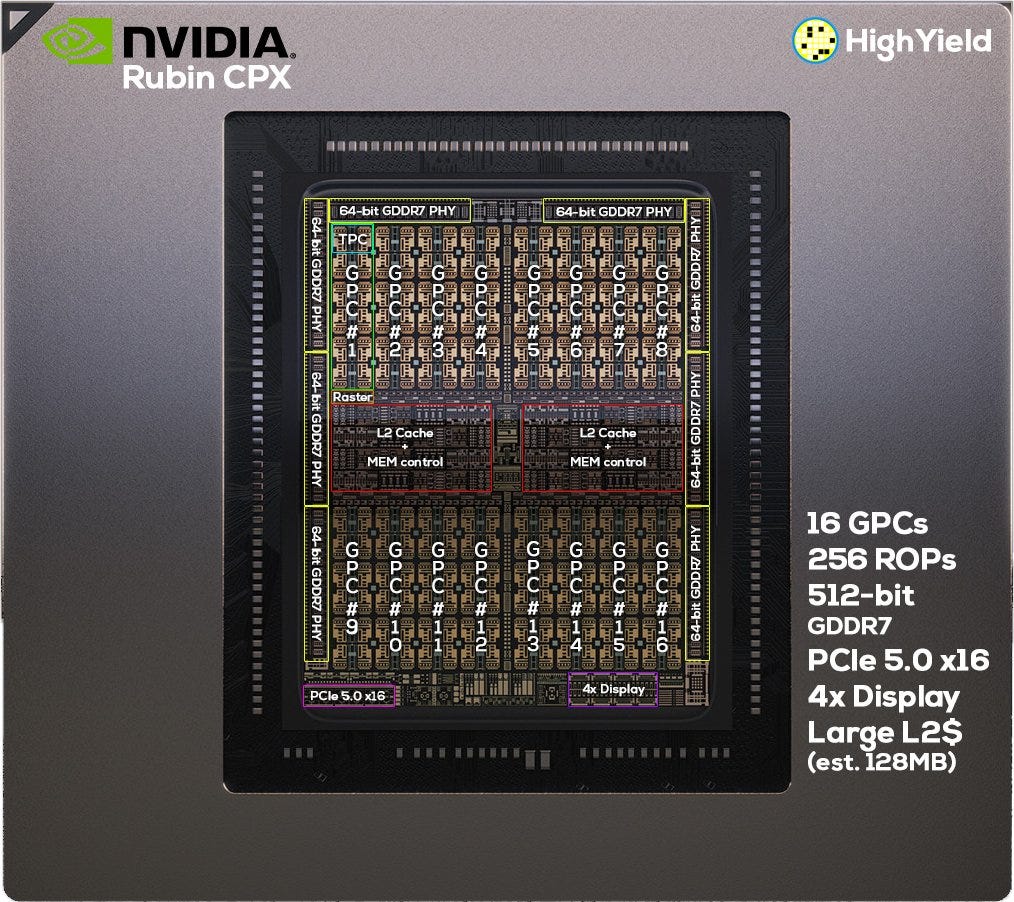
128GB GDDR7 to feed long-context agents.
30 PFLOPS NVFP4 compute to accelerate swarm inference.
Specialized “context processing” design because attention and parallel memory access dominate workloads.
These GPUs weren’t built for gaming. They were built because CLIs normalized agent-native coding.
5. The Cultural Shift
The metaphor itself changed:
“Copilot” = a helper.
“Agent” = an autonomous partner, always ready.
Developers no longer expect one assistant. They expect an infinite lattice of AI companions woven into the terminal. Rubin CPX is silicon tuned for that expectation.
6. The Post-IDE Horizon
If every CLI tab is a persistent agent, then the IDE is obsolete. We are entering a post-IDE world where:
The shell is the universal AI hub.
GPUs are optimized for agent orchestration, not shaders.
Developer workflows are an infinite lattice of imagination and execution.
Conclusion
Rubin CPX is not the start of a new product cycle — it’s the first expression of a new computing order.
AI CLIs broke the ceiling of what single copilots could do and normalized the idea of coding with swarms of persistent agents. That shift exposed the limits of old silicon and forced the birth of new architectures.
This is why Rubin CPX exists: not as a GPU for graphics, but as the hardware substrate for the post-IDE, agent-native world.